Breakfast Foods in English for Kids
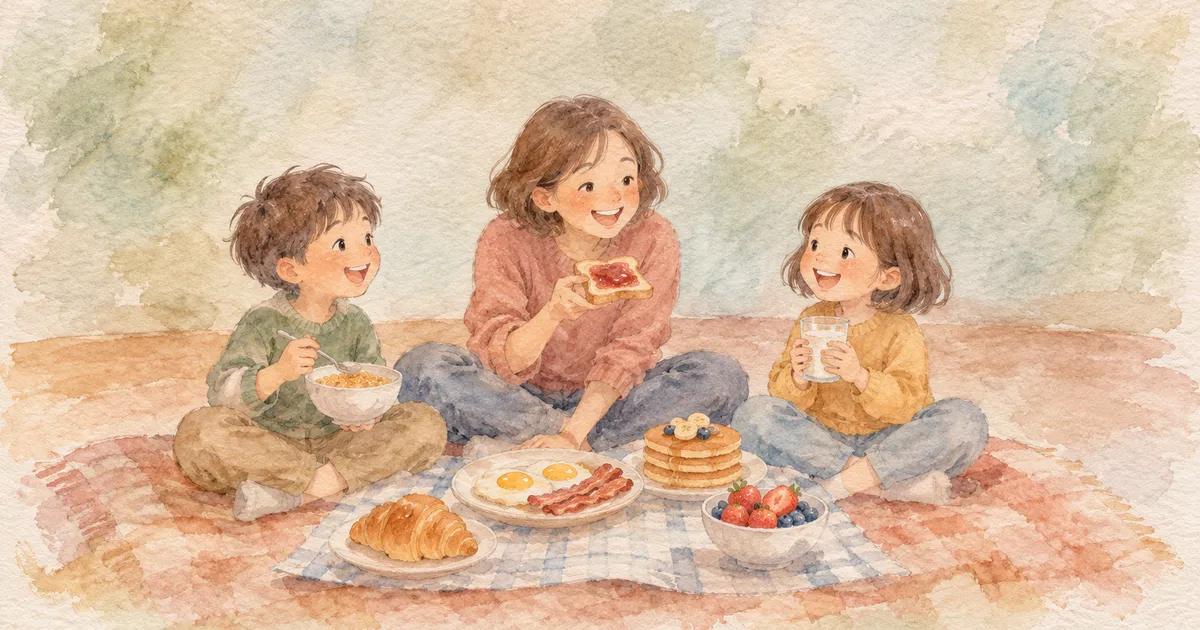
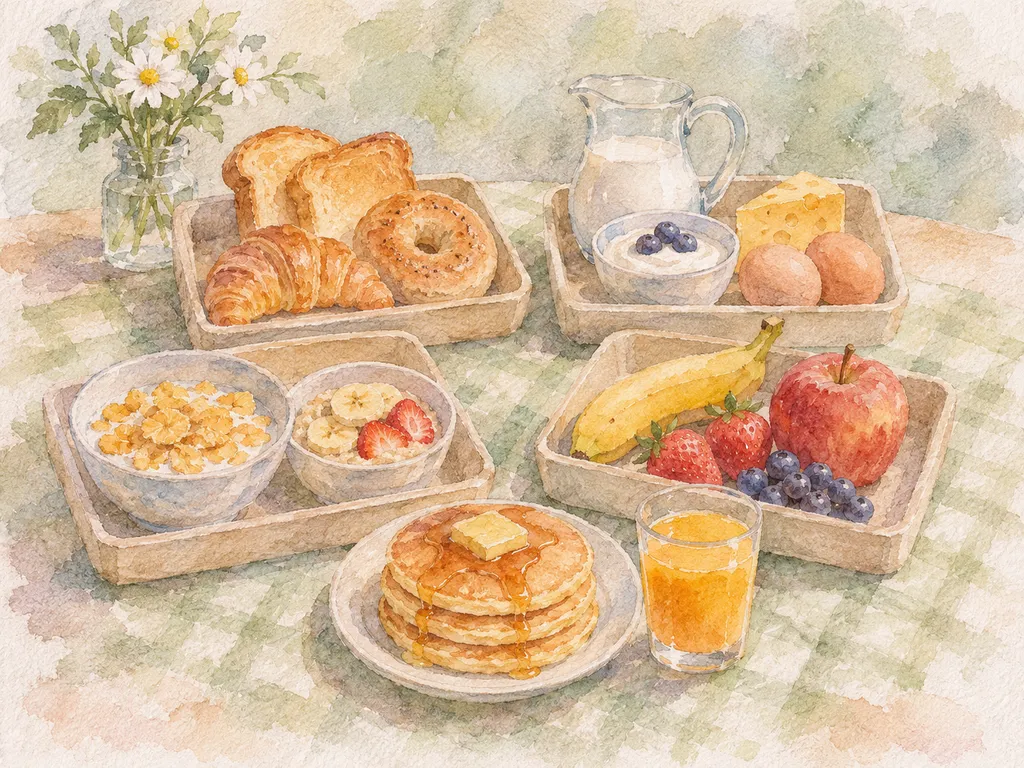
Breakfast Foods in English for Kids: Words and Activities introduces 30 food words and phrases for discussing a morning meal. Begin with familiar foods, then add three or four new words at a time. Children can point, sort, choose, ask, and answer before attempting longer sentences. The goal is not one “correct” breakfast: families eat different foods across countries and homes. Help your child name familiar items and say “I eat toast,” “I like mango,” or “Can I have some milk, please?”
📥 Breakfast Foods in English for Kids
Vocabulary, sentence practice, corrections, and a weekly family routine tracker
Leave your email — we'll send the PDF to your inbox.No spam — the PDF plus one short reminder. Unsubscribe anytime.
Core Breakfast Words and Phrases
For Breakfast Foods in English for Kids: Words and Activities, group vocabulary by food type. The table contains 30 items eaten across the world. Start with one row matching your family’s meals.
Teach chunks beside single words: “a bowl of cereal,” “a slice of toast,” “a glass of juice,” “a cup of tea,” and “a spoonful of yogurt.” Add action verbs: eat, drink, pour, spread, cut, peel, and mix. These phrases help children describe actions, not just objects.
Using the Words in Everyday Sentences
Breakfast Foods in English for Kids: Words and Activities builds short, practical exchanges. Model one pattern at a time: “I eat eggs for breakfast.” “I drink water.” “I put jam on toast.” Replace one word while keeping the sentence frame.
Questions make vocabulary practical. Ask, “What do you eat for breakfast?”, “Do you like porridge?”, “Would you like milk or juice?”, or “What is on your plate?” A beginner may answer with one word. Accept “banana,” then model the full form: “I eat a banana.”
Include different food traditions. Rice, beans, soup, bread, fruit, and eggs can all be breakfast foods. Children can compare meals without labelling one strange or wrong: “We eat rice at home.” “My friend eats cereal.” “Both are breakfast foods.” Multilingual children can connect English with words they know.
Activities for Different Ages
For ages 4 to 7, use real objects, toy food, or pictures. Place four items on a table and say, “Point to the toast.” Hide one item and ask, “What is missing?” At mealtime, offer a choice: “Milk or water?” Keep each round under a few minutes and repeat the words across several days.
For ages 8 to 10, turn vocabulary into short tasks. Children can sort cards into drinks, fruit, and other foods; design a breakfast plate; or survey relatives. Use two questions: “What do you eat?” and “What do you drink?” Report the results: “Three people eat bread. Two people drink tea.”
For ages 11 to 15, add reasons, quantities, and comparisons. Ask children to plan two breakfasts, write a short menu, or compare weekday and weekend meals. Sentence frames include “I usually eat…,” “I sometimes have…,” and “I prefer…because….” Older learners can explain how to prepare a dish using first, next, then, and finally.
Practice Ideas That Fit Family Routines
Breakfast Foods in English for Kids: Words and Activities works best inside a real routine. Put five word cards near the kitchen table. Each morning, your child chooses two cards and makes a sentence. Change the set at the end of the week, retaining one familiar card so the task tests language rather than memory.
Play “breakfast café.” One person orders while the other serves: “Can I have a pancake, please?” “Would you like honey?” “Yes, please.” “No, thank you.” Switch roles after three orders. LearnLink tutors use short role-plays because each word gains a purpose.
Build a Breakfast Plate
Choose one drink, one fruit, and two other foods from the table. Say or write four sentences: “I have…,” “I drink…,” “I like…,” and “I do not like….” For an extra challenge, add a reason with “because.”
Common Mistakes and How to Correct Them
Children often learn a food word before its English quantity or serving form. Correct the phrase through a natural reply, not a grammar lecture. If your child says, “two toast,” answer, “Yes, two slices of toast.” The table covers forms worth practising together.
Distinguish “for breakfast” from “at breakfast.” Use “for breakfast” to name food: “We have fruit for breakfast.” Use “at breakfast” for events during the meal: “We talk at breakfast.” Children need not learn every rule together. Choose one correction, model it, and resume the conversation.
- Choose three breakfast foods and ask your child to name each aloud.
- Model the correct word, then invite one clear repetition without criticism.
- Sort picture cards into drinks, fruit, cereals, and cooked breakfast foods.
- Compare two similar words, such as cereal and porridge, using pictures.
- Create one breakfast sentence and replace the food word three times.
When a word has several meanings or pronunciations, Cambridge Dictionary is a useful check before turning it into child-friendly examples.
Frequently Asked Questions
Use these answers to set the pace and match breakfast vocabulary practice to your child’s age and experience.
How Many Breakfast Words Should My Child Learn at Once?
Start with three to five words for a young beginner and five to eight for an older child. Choose foods your child sees or eats because familiar objects are easier to name. Add vocabulary after your child recognises most of the current set. Recognition can precede speech. Pointing to “porridge” correctly shows learning, even without saying the word.
Should I Correct Every Pronunciation Mistake?
No. Correct mistakes that block understanding, then model the word once in a calm voice. Invite another attempt without turning every meal into a pronunciation test. Focus on one sound at a time, such as the first sound in “juice” or the final sound in “milk.” Confident, understandable speech matters more than copying one accent.
What If Our Family Does Not Eat Typical Textbook Breakfast Foods?
Use the foods your family eats. Breakfast Foods in English for Kids: Words and Activities can include rice, soup, beans, flatbread, fruit, or another familiar item from your routine. English vocabulary describes real life, not a fixed menu. Add the English name to a picture or object, then practise it with the same sentence patterns.
How Often Should We Practise Breakfast Vocabulary?
Practise on three or four days each week for steady contact with the words. A two-minute choice, question, or sorting game can outperform one long session. Revisit older words while adding new ones. If your child becomes tired or guesses at random, stop and return another day with a smaller set.
Finish with three steps: choose five familiar words, practise one sentence pattern for two minutes, and revisit the set on three days this week. Ask your child to point to each item, name it, and use it in a short exchange. Add one new word when the current set feels easy.
Want to see how these ideas work in a real lesson — try a LearnLink trial lesson.
Stay updated on our latest tips and resources by following us on Instagram LearnLink.