Elementary Vocabulary List for Beginners

Start with 64 concrete, reusable words. This elementary vocabulary list covers family, home, school, body, food, animals, colours, and actions. Children learn meaning before spelling: they point, choose, move, and speak before writing. Older beginners build longer phrases with the same words. Work slowly until your child understands and uses each word without a prompt.
📥 Elementary Vocabulary Builder for Kids Ages 5-9
A printable word practice pack with simple noun, verb, adjective, and feelings groups.
Leave your email — we'll send the PDF to your inbox.No spam — the PDF plus one short reminder. Unsubscribe anytime.
What Families Need to Know
A sound elementary vocabulary list uses words from daily life. Children can open a door, eat rice, and find a blue object. Real objects connect each word to its meaning.
Word knowledge develops in stages. Your child may recognise “rabbit” in a picture before saying it, then say it before spelling it. Treat recognition, speech, reading, and writing as separate steps, not one test.
A multilingual child may know the idea in two or three languages. Build on that knowledge: show the object or action, say the English word, then make a short phrase. Translation may confirm meaning but need not lead each activity.
A Useful Starter Set
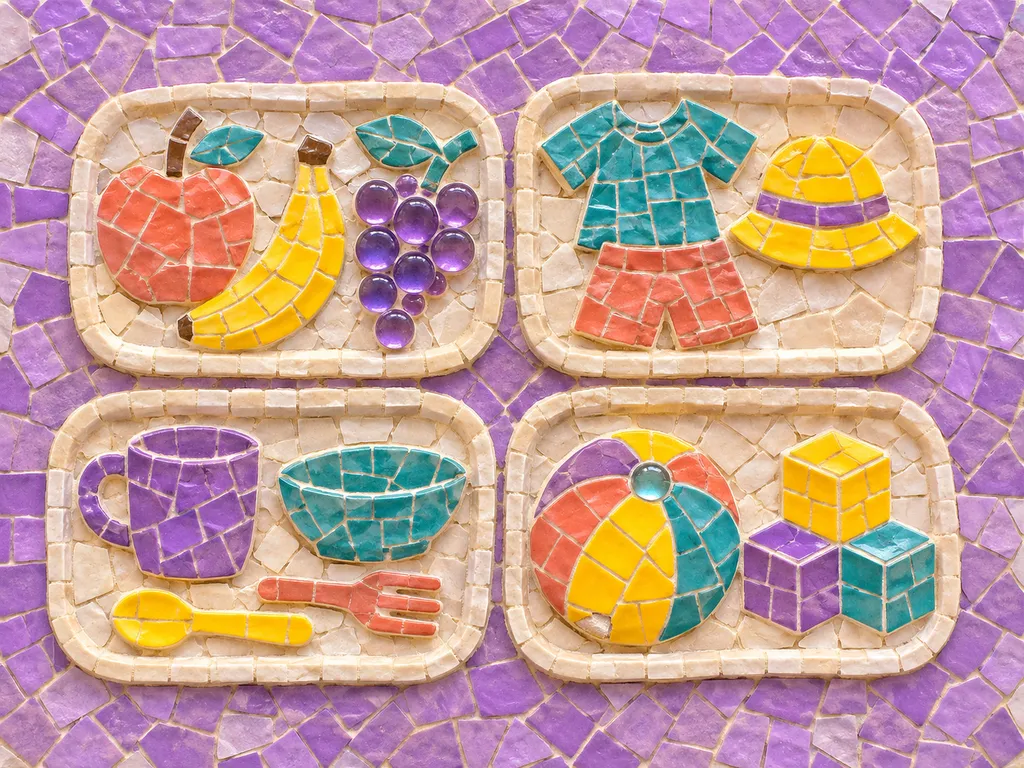
Explore the elementary vocabulary list below. It includes eight words in each of eight practical groups, giving your child a useful set to practise. Want to make those words easier to use? Try the sentence frames—they turn individual words into real, usable language without making the activity feel like a heavy grammar lesson.
Match family and food words to your home. Children need only relevant family labels, and familiar foods vary across cultures. Keep the language pattern, replacing a less relevant word with one your child meets often.
How to Introduce the Words at Home
Use the elementary vocabulary list in sets of five to eight words. Show an object or picture, say the word once, and let your child point. Then offer a choice: “Is this a chair or a bed?” Request the word after recognition is secure.
Next, place the word in a short chunk. Instead of drilling “apple” ten times, use “an apple,” “a red apple,” and “I like apples.” Keep each model short enough to repeat without losing meaning.
Correct with a calm model. If your child says, “It blue,” reply, “Yes, it is blue.” Skip grammar explanations during the activity. The full model offers another chance to hear and use the form.
Examples by Age and Readiness
Age guides; it does not decide. A new learner aged nine may need picture work, while a younger confident reader may enjoy labels and short clues. Choose a starting point that brings success with effort.
The same elementary vocabulary list can serve different learners. Change the task, not only the words. Younger children point and move; early readers sort labels; older beginners describe, compare, and ask follow-up questions.
Practical Activities for Short Sessions
Choose one activity and stop while your child remains engaged. Five focused minutes is enough. Practise during a meal, a walk, or before a lesson.
- Find and touch: Say “Find something green” or “Touch the table.”
- Odd one out: Give three words, such as “cat, dog, pencil,” and ask which one does not belong.
- What is missing? Show four objects, hide one, and ask your child to name it.
- Draw and tell: Your child draws a room, animal, or meal and labels three parts.
- Action chain: Give two commands, such as “Stand and look” or “Come and sit.”
Afterward, ask for one phrase your child can say unaided. This check shows whether the word has moved from recognition towards active use.
Try a Three-clue Challenge
Choose one word and give three clues: “It is an animal. It is small. It can swim.” Your child answers “fish,” then chooses the next word and gives the clues.
In LearnLink lessons, tutors move from seeing and hearing a word to using it in meaningful conversation. At home, the same sequence keeps practice focused and prevents a spelling test.
How to Review and Extend the List
Keep the elementary vocabulary list visible. Review a small mixed set, not one full category: two familiar words and one newer word. Revisit hard items another day before your child tires.
Mark progress by skill: recognised, said, read, or written. A word may occupy more than one column over time. This record shows the next practice needed better than a single score.
Extend words through connected phrases. “Dog” can grow into “a brown dog,” “The dog can run,” and “I can see two dogs.” Add detail once the shorter phrase feels secure.
- Review five words from the elementary vocabulary list using picture cards today.
- Ask your child to sort ten words into familiar topic groups.
- Read one short book and highlight words already included in the list.
- Add three useful words your child notices during meals, play, or errands.
- Revisit the expanded list and use each new word in a sentence.
When a word has several meanings or pronunciations, Cambridge Dictionary is a useful check before turning it into child-friendly examples.
Frequently Asked Questions
How Many Words Should a Beginner Learn at One Time?
For a first elementary vocabulary list, introduce five to eight words in one short session. Your child may recognise every word but say only two or three at first. This starting pattern is normal. Review the words in new games and phrases before adding another small set.
Should I Translate Every English Word?
No. Begin with an object, picture, gesture, or action when meaning is obvious. Translation helps when a word is abstract or your child remains unsure. Use it briefly, then return to English for the model phrase and practice task.
What If My Child Can Say a Word but Cannot Spell It?
Keep speaking and spelling as separate goals. Correct speech shows knowledge even when spelling is not secure. After understanding the word, younger beginners can trace, match, or copy it. Older children can study sound and letter patterns during a later reading or writing task.
How Often Should We Review Vocabulary at Home?
Review briefly across the week, not in one long weekly drill. Change the task but retain the words: point on Monday, sort on Wednesday, and describe on Friday. Once your child recalls a word in a phrase, review it less often and introduce a new item.
Start today with three steps: choose five words, practise for five minutes, and ask your child to use one word in a short phrase. Repeat the set on three different days before adding vocabulary.
Want to see how these ideas work in a real lesson — try a LearnLink trial lesson.
Stay updated on our latest tips and resources by following us on Instagram LearnLink.